Ever since SF496 was signed into law back in May 2023, there has been confusion about what it requires. Now, three years later and after much litigation, there is more clarity on what this law means and how it impacts schools, parents, and students.
The law is still being litigated. But the court also has established some important constitutional guardrails in how it can be enforced in Iowa public schools.
To that end, the ACLU of Iowa is releasing know-your-rights materials, including a flyer and website content, explaining the law and what is and is not permitted under SF 496.
“There are three provisions of the law that are especially harmful to LGBTQ kids and to free speech and expression, which we challenge in our lawsuit. These are a provision banning certain books in library programs, another prohibiting mandatory instruction related to sexual orientation or what Iowa calls "gender theory," and a third that requires schools to inform parents if their children request accommodations related to their gender identity at school—even if students have a good reason why they don’t want their parents to know they are transgender," said Thomas Story, ACLU of Iowa senior staff attorney.
"It’s critical that public school students have information about how these three provisions of the law impact them and what their rights are as they navigate school. And that’s what this resource aims to do. We also want to hear from Iowans whose rights are violated following court decisions that have narrowed the impact of the law," Story said.
• The only books that should be removed from school libraries in K-12 are those with explicit, specific descriptions or depictions of six types of sexual content, as spelled out in Iowa law.
The courts have made it clear that this law should be applied only to books with detailed, explicitly written descriptions or visual depictions of one of six types of sexual contact, defined in another part of Iowa law (not SF 496), Iowa Code § 702.17(1)–(6).
"Unfortunately, some school districts removed dozens or even hundreds of titles that don’t have those kinds of detailed, explicit depictions or descriptions. We hope this resource can help address that and prevent it moving forward—even as our case challenging the law continues. Likewise, we want kids to know they aren’t themselves prohibited from bringing a book to school, reading it there, or talking about it, even if it is otherwise banned from school library shelves," Story said.
• Books with LGBTQ content, generally, can remain.
As long as a book a) doesn't contain depictions or descriptions of the six types of sexual contact and b) is available for voluntary review rather than required reading, a book with LGBTQ characters or a book dealing with gender identity or sexual orientation as topics is not prohibited.
These include All Are Welcome, which features an image of two male parents of a student, and Melissa, which tells the story of a child understanding their transgender identity.
• GSAs (student groups for LGBTQ students and their allies) and their promotion or activities, including posters, announcements, or events, are permitted.
• Pride flags, Safe Space, Everyone Is Welcome Here, rainbows, and similar signs or displays are permitted for display by students and in classrooms, as long as they aren’t part of the mandatory curriculum.
• Teachers, students, and staff can generally reference and discuss their own or others’ gender identity and sexual orientation during school—again, just not as part of the mandatory curriculum.
• It’s important that students know that if they DO request an accommodation related to their gender identity, the school will notify their parents or guardians.
However, the court did limit what triggers the notification requirement. Schools do NOT need to notify parents because students merely state or express their own gender identity. That could include their using cultural indicators such as dress, hairstyle, speech, and other behaviors, so long as they aren’t making a specific "request" for an "accommodation" of some sort, such as being addressed by a different name.
Students and teachers with questions about the current status of the law or who feel that the law is being used to wrongly ban books or block free speech should contact legal.program@aclu-ia.org.
Related Issues
Related Content
Iowa's Banned Books and Don't-Say-LGBTQ Law in Public Schools
Why Having Banned Books in Iowa Schools Matters
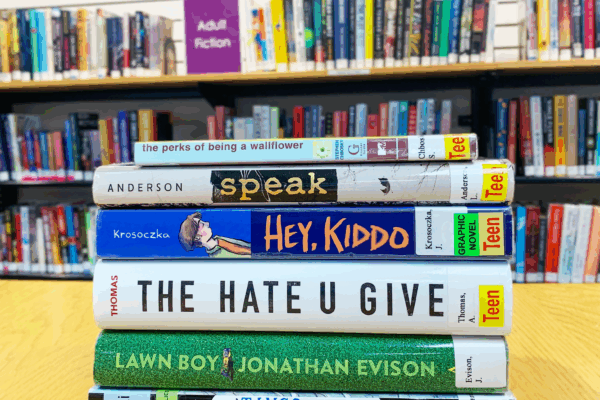
Stay Informed
Sign up to be the first to hear about how to take action.
By completing this form, I agree to receive occasional emails per the terms of the ACLU’s privacy statement.
By completing this form, I agree to receive occasional emails per the terms of the ACLU’s privacy statement.