
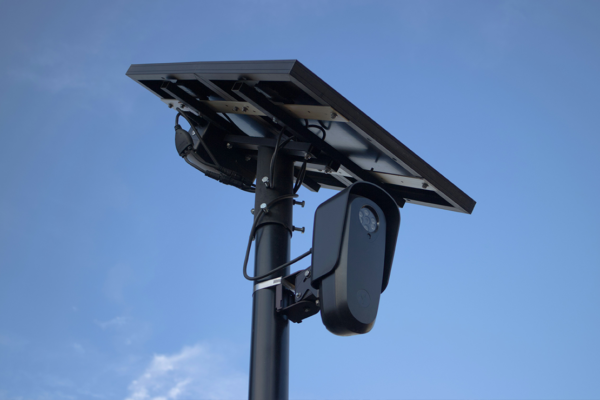
A new report, by the University of Iowa Technology Law Clinic and the ACLU of Iowa, has documented the rapid growth of automated license plate readers (ALPRs) with few protections from abuse.
ALPRs are not speed cameras. They are not "red light" cameras. And, in fact, they're worse.
ALPRs are cameras used on Iowa roads that take thousands of photos of license plates from every car that drives by. This data is then fed into enormous national surveillance networks with little oversight or transparency. Law enforcement is not required to get a warrant to use these databases to target or track people.
The report surveyed 48 law enforcement agencies across Iowa and found:
- The use of ALPRs has expanded rapidly in our state.
- The number of ALPR cameras in a community can vary widely. Des Moines had the most with 130.
- Some agencies were not transparent about the number and location of their ALPRs.
- There are vast inconsistencies in the use and regulation of ALPR data in Iowa, including how data is retained, deleted, what information is publicly available, and who can access the data.
- Iowa has no meaningful laws that limit the use of ALPRs and a person's access to the data being collected on them.
- Government officials overseeing the implementation of ALPRs in their communities are often not well-informed on what they are, how they work, and what the privacy implications are for their constituents.
- ALPRs can be inaccurate. There have been incidents nationwide in which ordinary people, with children in the car, were stopped and detained by police—sometimes at gunpoint—due to ALPR errors. A separate study found that 1 in 10 ALPR readings contains an error.
- Access to ALPR databases has been abused. There are recurring national media accounts of law enforcement officers using them to stalk an ex-girlfriend or ex-wife. Texas police used their access to ALPR networks to search 83,000 cameras nationwide to track down a woman who had an abortion in Illinois, where abortion care remains legal.
- The price of local governments surveilling Iowans is steep. Cedar Rapids, for example, spends an average of $20,000 a month on ALPRs.
- Flock Safety, the largest vendor of ALPRs in Iowa, said that it has not given access to Immigration and Customs Enforcement (ICE) or U.S. Border Patrol. But nationally, local police have been found to regularly run searches on ICE’s and Border Patrol’s behalf.
There are valid uses of ALPRs, like checking license plates against lists of stolen cars, to assist in AMBER Alerts, or collecting tolls. But even then, they must be deployed and used fairly.
Instead, right now, we have warrantless, dragnet surveillance of drivers without any probable cause or reasonable suspicion. The data that's collected is being stored longer than reasonably necessary and shared broadly without good reason or meaningful checks and balances. We are concerned that ALPR devices are being disproportionately deployed in low-income communities and communities of color.
That’s why we need policy and law reform that strikes the right balance between public safety and civil liberties.