
Iowa City, Iowa — Today, the Iowa Supreme Court ruled that the University of Iowa may not repurpose a private scholarship that a donor specified should go to Black students majoring in the physical sciences, especially chemistry. Instead, the university wanted to give the scholarship to first-generation students.
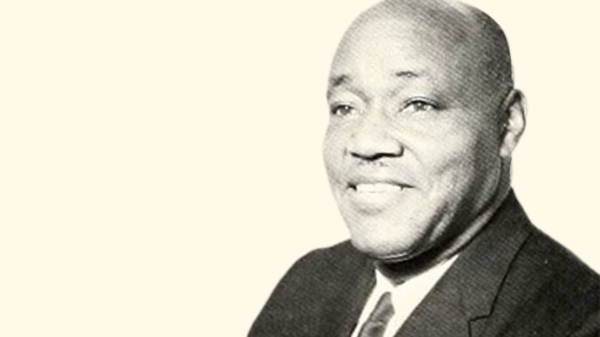
That would conflict with the wishes of the donor, now deceased, expressed in his will. In 1997, chemistry professor and civil rights pioneer Ezra Totton established the scholarship in keeping with his life's work. Back in the 1930s, he was part of litigation to allow Black students to enter graduate programs at the University of Tennessee, and he strove his whole life to improve access to the sciences for Black students.
Regardless, the University of Iowa, where Black students make up just 3 percent of the enrollment, filed a petition in district court, requesting permission to distribute Dr. Totton's gift differently than he had specified. The university argued that because of a recent affirmative action decision by the U.S. Supreme Court, Students for Fair Admissions, Inc. v. Harvard College, it should be able to repurpose private donations like Dr. Totton’s.
The district court disagreed and the request was denied. The university appealed, and the case went to the Iowa Supreme Court.
Because of the importance of the case, the ACLU of Iowa and the NAACP Iowa-Nebraska, along with the ACLU’s State Supreme Court Initiative and the NAACP, filed an amicus brief in the case.
The two key points made were:
- The scholarships are distributed from private funds, not government funds, and therefore, the law protecting the wishes of the donor applies and limits when a charity (in this case, the University of Iowa) goes against those wishes.
- It is for the court, not the University, to determine how best to modify the gift so that Dr. Totton’s wishes would be honored as best as possible.
Betty Andrews, president of the NAACP Iowa-Nebraska State Area Conference of Branches, said, "Dr. Totton was a pioneering civil rights leader who dedicated his life to breaking barriers and creating opportunities for others. His desire to help African American students pursue their dreams in chemistry was rooted in both his personal experience and his belief in the transformative power of education. He personally experienced discrimination against Black people in education and in every other area of public life, and worked heroically to tear down those barriers—not just for himself, but for everyone who came after."
"We don't agree with the U.S. Supreme Court decision that made the University of Iowa reconsider Dr. Totton's scholarship, but we are pleased that today’s Iowa Supreme Court decision helps honor his legacy and preserves the possibility that his gift may continue advancing opportunities for African Americans."
Arthur Totten, nephew of Dr. Totton, said, "I do not believe that administering these scholarships to instead go to first-generation students would be consistent with my uncle's intent. His goal, informed by his own life experiences of challenging and overcoming barriers for Black people to advance in higher education and of Black individuals supporting each other in this endeavor, was to continue to help black students do the same." (Note the different spelling of Arthur's last name. The two branches of the family spell it slightly differently.)
Rita Bettis Austen, ACLU of Iowa Legal Director, said, “The district court was correct in our view that the university had failed to show that the affirmative action decision it relied on, Students for Fair Admissions v. Harvard, should apply to limit private donations like Dr. Totton’s."
"Regardless, as we argued, Iowa law allows for it to seek to modify gifts when administering them has become impracticable, which is no doubt the case here, with the Department of Justice threatening to bring lawsuits against universities to block these sorts of privately funded scholarships," Bettis Austen said.
"But that is not the end of the story, as the university has argued. The law protects the wishes of donors by requiring that modifications be made to protect them as best as possible, and be made by the courts, not by the charity seeking to modify them. Here, the university had sought to redirect Dr. Totton’s gift from Black chemistry students to first-generation chemistry students. But they offered no factual basis to support the argument Dr. Totton would have wanted that, and, as we pointed out in our brief," she said.
"While there is some overlap between the two student groups, these are distinct populations—especially at the University of Iowa —and without question, repurposing Dr. Totton’s gift to students who were the first person in their family to attend college would have had the effect of significantly diluting its potential benefit to Black students," Bettis Austen said.
"Black students make up 12.5 percent of all post-secondary enrollment nationwide, versus 25.8 percent who are first-generation. At the University of Iowa, this
contrast is even more stark. Black students make up less than 3 percent of all students, and 19 percent are first-generation. Further, data show that Black students qualify for financial aid more than first-generation students. Black students also carry the largest student loan debt. And Black students have a lower gross income on average than first-generation students, ten years after earning their bachelor’s degree.
We are grateful to the Court for the opportunity to participate in this case, and we are extremely indebted to the wonderful family of Dr. Totton, who helped us carefully document for the Court the remarkable contributions Dr. Totton made to the civil rights movement, a legacy for which he deserves to be remembered and honored."
Today's decision directs that the case be returned to district court to decide how the funds should be dealt with, using the following guidance:
- Allowing an advocate for the donor's intent to participate in the proceedings
- Considering the entire terms of Dr. Totton's will and other relevant evidence
- Considering giving the money to another institution better able to distribute the money in a way more in keeping with Dr. Totton's wishes, but without limitations to Black students only
Dr. Totton was a remarkable pioneer for civil rights and against racial segregation in higher education. In 1939, he was one of six highly qualified Black students who filed suit to be admitted to graduate and professional programs at the University of Tennessee, which had a policy banning Black students. That case was an early chapter in a multi-state legal strategy led by the NAACP seeking to dismantle widespread race segregation in education and culminating in the historic victory in Brown v. Board of Education.
The amicus brief was authored by Rita Bettis Austen and Thomas Story, ACLU of Iowa; David S. Walker and Russell E. Lovell; NAACP Iowa-Nebraska Conference; ReNika Moore, Sarah Hinger, and Julie Murray, ACLU Foundation; and Janette Louard and Anthony Ashton, NAACP.
Related Issues
Stay Informed
Sign up to be the first to hear about how to take action.
By completing this form, I agree to receive occasional emails per the terms of the ACLU’s privacy statement.
By completing this form, I agree to receive occasional emails per the terms of the ACLU’s privacy statement.